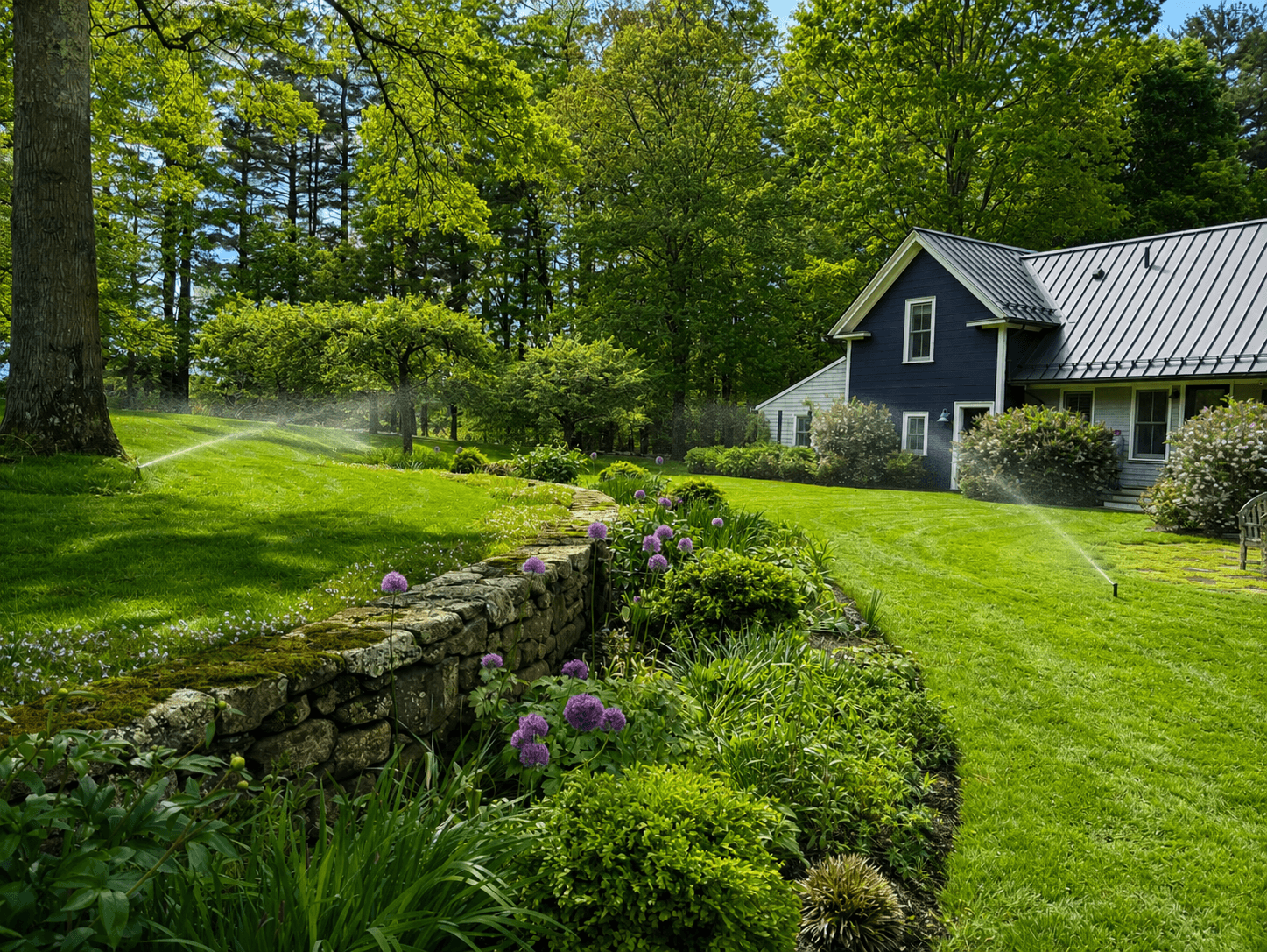
Estate landscapes demand a different approach to irrigation planning. Large lawns, mature trees, layered plantings, and elevation changes all influence how water should be distributed across the property. A system designed for a typical residential yard often fails to deliver consistent results at this scale.
That is why the planning process used by a lawn sprinkler system contractor matters. At the estate level, irrigation requires system balance, efficiency, long-term performance, and protecting high-value landscaping from water-related stress or damage.
Understanding how contractors plan estate irrigation systems helps property owners evaluate qualifications and make informed decisions before installation begins.
How Estate Irrigation Differs from Standard Residential Systems
Estate irrigation systems introduce challenges that rarely exist in standard residential landscapes. As property size increases, so does the complexity of water distribution, system design, and long-term management.
- Larger system scale
Estate systems often cover multiple acres and support turf, trees, and diverse plantings, while residential systems serve smaller, simpler landscapes. - Greater hydraulic complexity
Longer pipe runs and higher water demand require precise pressure and flow calculations to maintain even coverage across all zones. - More detailed zoning
Estate properties may need dozens of zones designed around plant type, sun exposure, soil conditions, and slope to prevent overwatering and plant stress. - Higher efficiency requirements
Larger properties face greater water-use scrutiny, making smart controllers, pressure regulation, and precise scheduling essential. - Ongoing maintenance needs
Estate systems require regular inspections, seasonal adjustments, and long-term service planning to maintain performance and protect landscape value.

What are the 4 Types of Sprinkler Systems?
No single sprinkler system works best for an entire estate. Estate landscapes perform best when multiple system types are used together, each matched to specific areas of the property.
1. Spray Sprinkler Systems
Spray systems release water in a fixed pattern and are commonly used for small lawn areas. They provide quick coverage but can lead to runoff or overspray on large or sloped properties if not carefully designed.
2. Rotor Sprinkler Systems
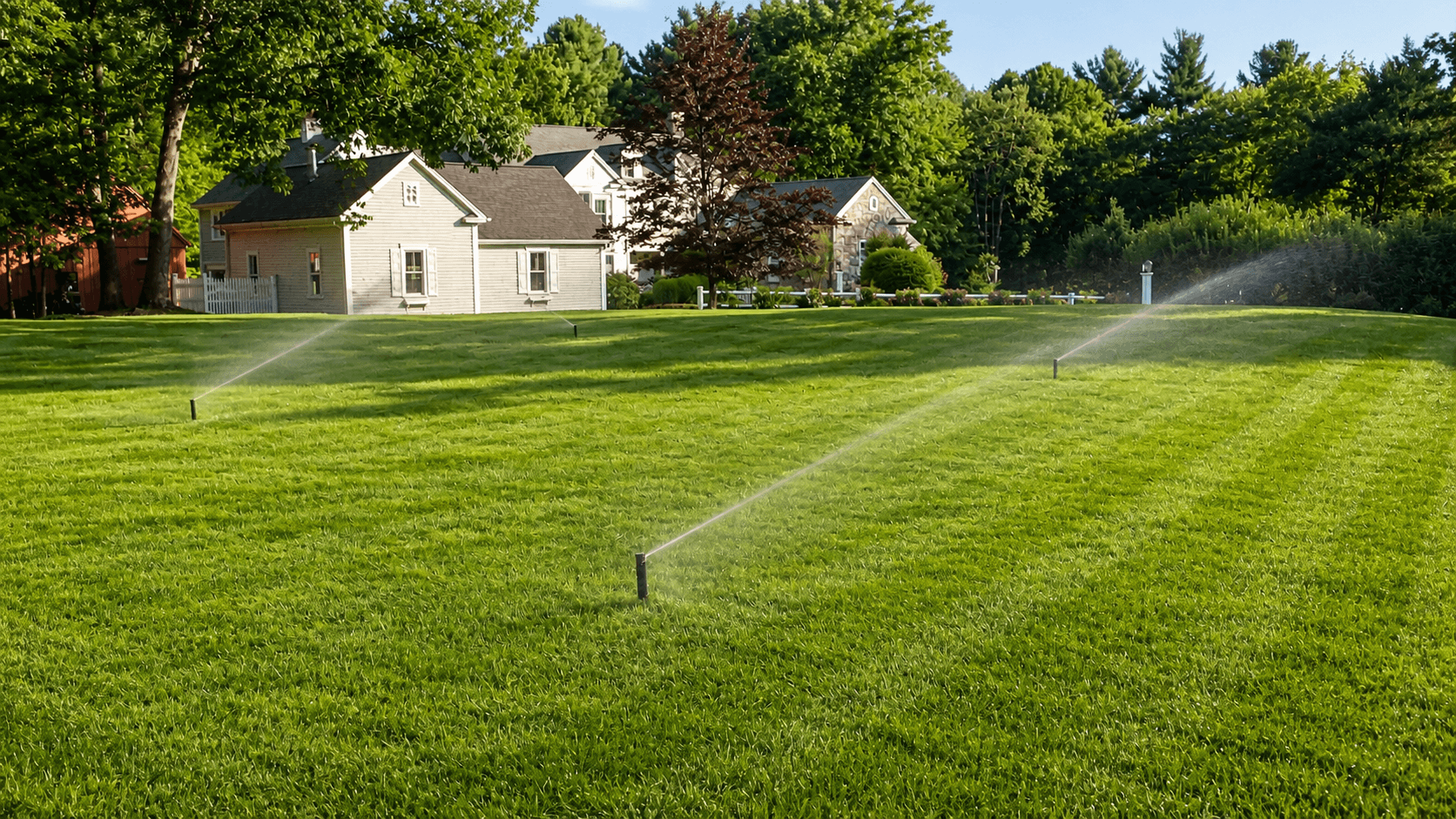
Rotor systems rotate streams of water over larger areas. They are commonly used for expansive lawns because they distribute water more evenly and reduce runoff when properly spaced.
3. Drip Irrigation Systems
Drip systems deliver water directly to the root zone of plants through tubing and emitters. They are ideal for trees, shrubs, garden beds, and areas where precise water control is needed.
4. Soaker Hose Systems
Soaker hoses slowly release water along their length. They are typically used in garden beds or planting rows but are less common for estate lawns due to limited coverage control.
Which Sprinkler System Type Is Best for Estate Properties?
No single sprinkler system works best for an entire estate. Estate landscapes perform best when multiple system types are used together, each matched to specific areas of the property. A qualified lawn sprinkler system contractor designs estates using a combination approach rather than relying on one system for everything.
Here is how the four types typically apply to estate-level landscapes:
- Rotor sprinkler systems are best for estate lawns.
Rotors are the preferred choice for large turf areas because they cover wide spaces evenly and apply water at a slower rate. This reduces runoff, improves absorption, and supports consistent lawn health across expansive areas. - Drip irrigation systems are best for trees, shrubs, and gardens.
Drip systems deliver water directly to plant roots, making them ideal for high-value trees, ornamental beds, and areas where overwatering can cause damage. They also improve water efficiency and reduce evaporation. - Spray sprinkler systems are limited to small or defined areas.
Spray heads may be used in compact lawn sections or irregular spaces, but they are rarely suitable as the primary system on estates due to higher runoff and overspray risk. - Soaker hose systems have limited estate use.
Soaker hoses are occasionally used in specific garden rows or temporary planting areas but lack the control and durability needed for large estate landscapes.
For estate properties, rotor sprinklers paired with drip irrigation provide the best balance of coverage, efficiency, and long-term performance.
An experienced lawn sprinkler system contractor selects and integrates these systems based on landscape layout, plant types, and water regulations rather than using a one-size-fits-all approach.
How Zoning Strategy Affects Estate Irrigation Performance
Zoning is one of the most important design decisions in an estate irrigation system. Each zone controls when and how water is applied, so improper zoning affects the entire landscape. On estate properties, zoning errors are amplified due to system size and varied plant needs.
Effective zoning groups plants with similar water requirements and environmental conditions. Turf areas require frequent, shallow watering, while trees and shrubs need deeper, less frequent irrigation.
When these plants share a zone, one group is inevitably overwatered or stressed. Over time, this leads to unhealthy growth, increased water use, and higher maintenance costs.
Estate zoning also accounts for sun exposure, slope, and soil type. South-facing lawns dry out faster than shaded areas. Sloped sections require lower application rates to prevent runoff. Clay soils absorb water differently than sandy soils.
A qualified lawn sprinkler system contractor designs zones around these factors to maintain consistent performance across the property.
As landscapes mature, zoning flexibility becomes increasingly important. Trees develop deeper roots, plant canopies expand, and water needs change. Well-designed estate systems allow zones to be adjusted or reprogrammed without major reconfiguration, preserving efficiency and reducing future disruption.
Why Water Efficiency Is Essential for Estate Properties
Water efficiency is not optional on estate properties. Larger irrigation systems use more water by default, increasing both operating costs and regulatory exposure. Without efficient design, even small inefficiencies can result in significant waste over time.
Modern estate irrigation systems focus on delivering water precisely where and when it is needed. Pressure-regulated sprinkler heads help maintain consistent output across long pipe runs, preventing misting and overspray.
Smart controllers adjust watering schedules based on real-time weather data, reducing unnecessary irrigation during cooler or wetter periods. Seasonal programming ensures the system adapts to changing conditions throughout the year.
A knowledgeable lawn sprinkler system contractor integrates these tools as part of the overall system strategy, not as add-ons. Efficiency is built into the design to protect the landscape, reduce water consumption, and support compliance with local water-use regulations.
What to Look for in a Qualified Estate Irrigation Contractor
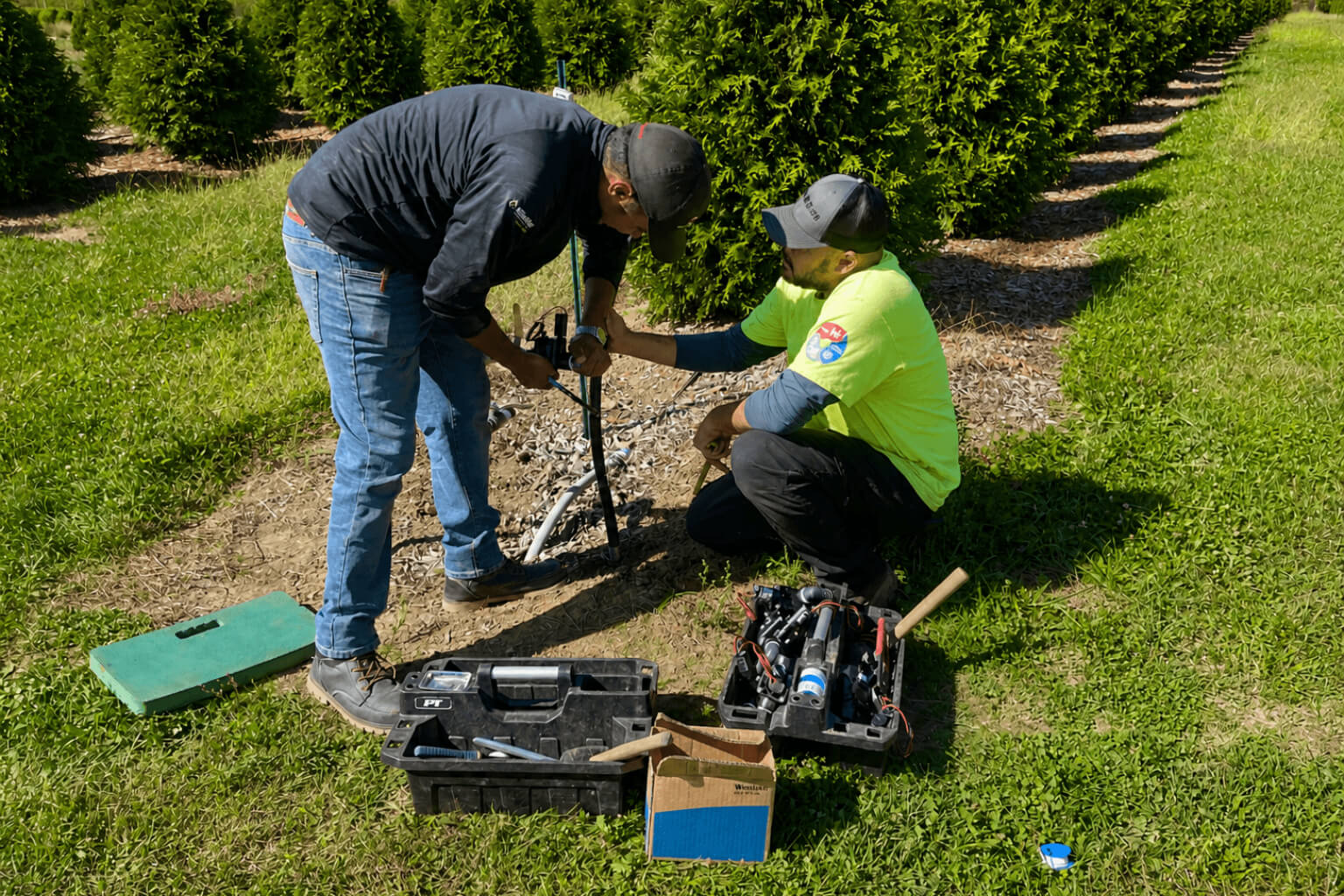
The right contractor makes their expertise visible through process, not promises. These green flags signal that a lawn sprinkler system contractor understands estate-scale systems and is focused on long-term performance rather than short-term installation speed.
- Uses site-specific design logic
The contractor explains irrigation decisions based on your property’s layout, soil conditions, slopes, and plant types instead of relying on standard templates. - Performs pressure and flow testing upfront
Water pressure and flow are measured before design is finalized, ensuring each zone operates correctly across long pipe runs and varied elevations. - Designs zones by plant type and exposure
Turf, trees, shrubs, and gardens are separated into appropriate zones based on water needs and sun exposure, reducing waste and plant stress. - Recommends efficiency features with clear reasoning
Smart controllers, pressure regulation, and precision heads are suggested based on actual property needs, not as default upgrades. - Provides detailed proposals and documentation
The contractor delivers clear system layouts, equipment lists, and scope descriptions that support transparency and future maintenance.
Warning Signs of an Unqualified Irrigation Contractor
Estate irrigation leaves little room for shortcuts. These red flags often indicate a contractor lacks the experience or planning discipline required for large, complex landscapes.
- Skips site evaluation or hydraulic testing
Without testing, system performance is left to guesswork, increasing the risk of uneven coverage and long-term issues. - Uses generic system designs
One-size-fits-all layouts fail to account for property-specific challenges such as slopes, mixed plantings, and long distances. - Avoids detailed discussions about zoning or efficiency
Vague or rushed answers may signal limited technical understanding or unwillingness to customize the system. - Prioritizes speed or low pricing over planning
Estate systems require careful design. A focus on fast installs or bargain pricing often leads to costly corrections later. - Provides minimal or unclear proposals
Lack of documentation makes it difficult to understand what is being installed and complicates future service or upgrades.
Final Perspective for Estate Owners
Estate irrigation requires careful planning, technical precision, and long-term thinking. The size and complexity of estate landscapes introduce challenges that standard residential systems are not designed to handle, from hydraulic balance and zoning strategy to efficiency and ongoing maintenance.If you are planning a new irrigation system or reassessing an existing one, Corbette Irrigation can help you evaluate your property’s needs with clarity and expertise. Reach out to Corbette Irrigation to start a conversation about irrigation planning tailored to your estate.