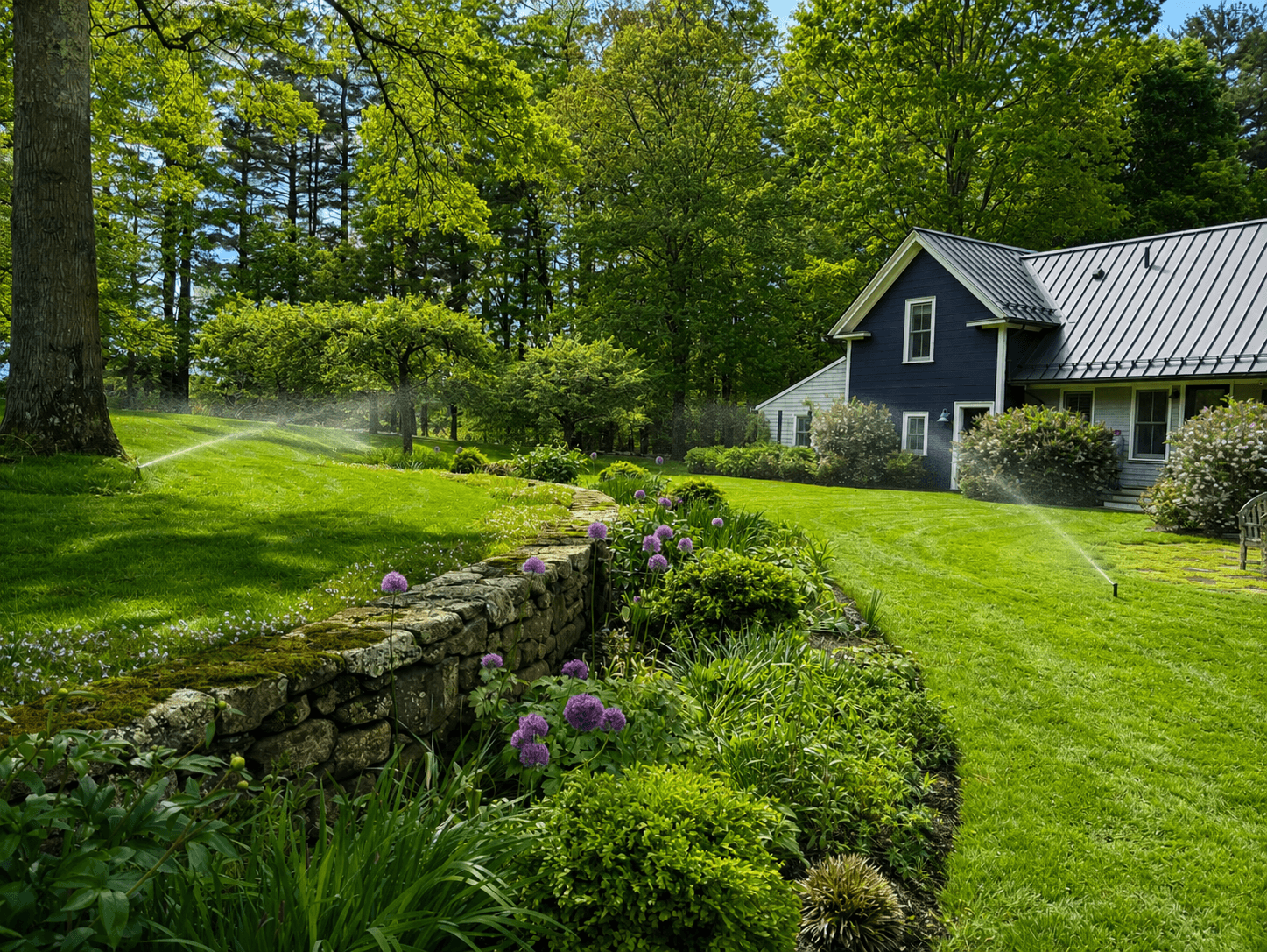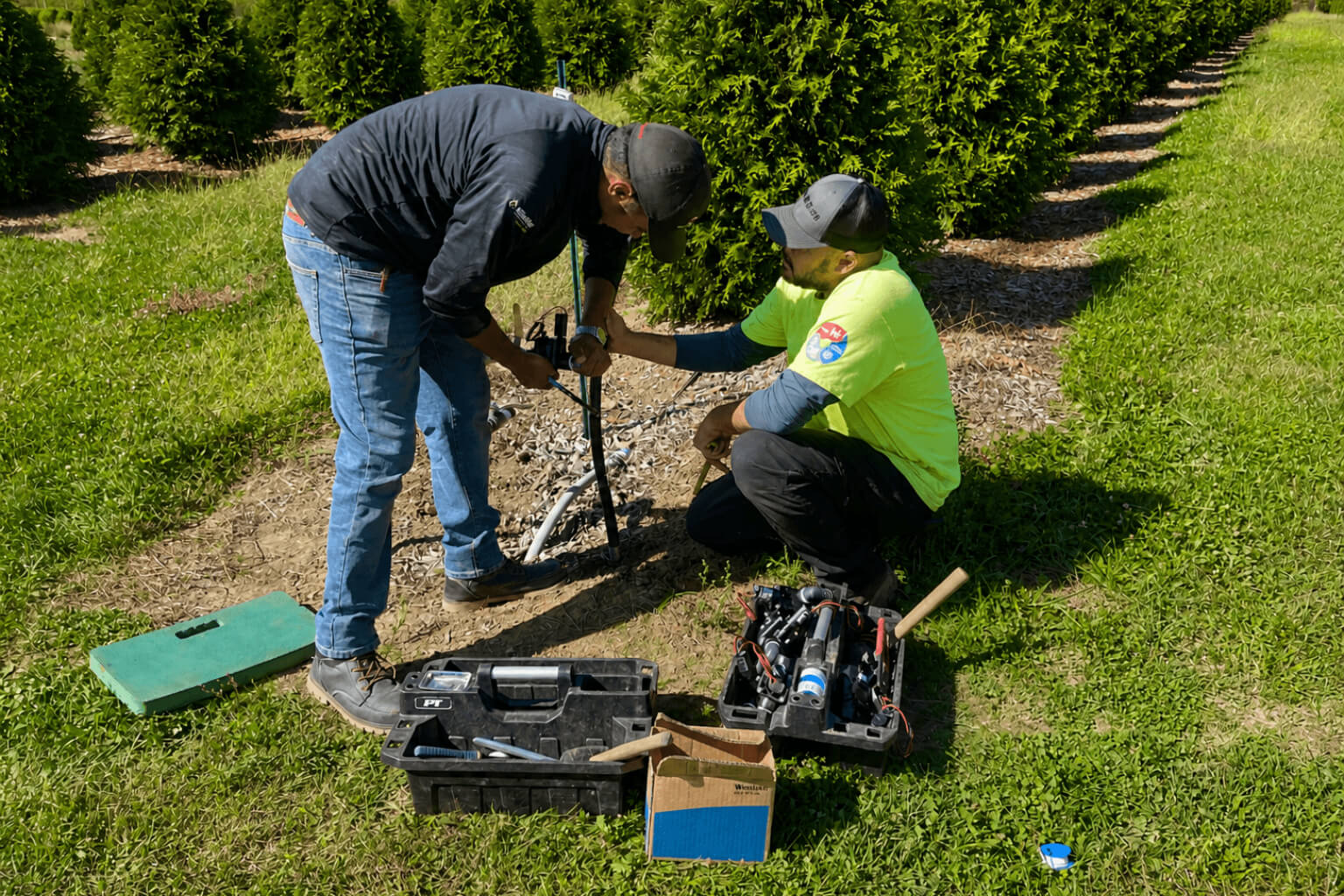
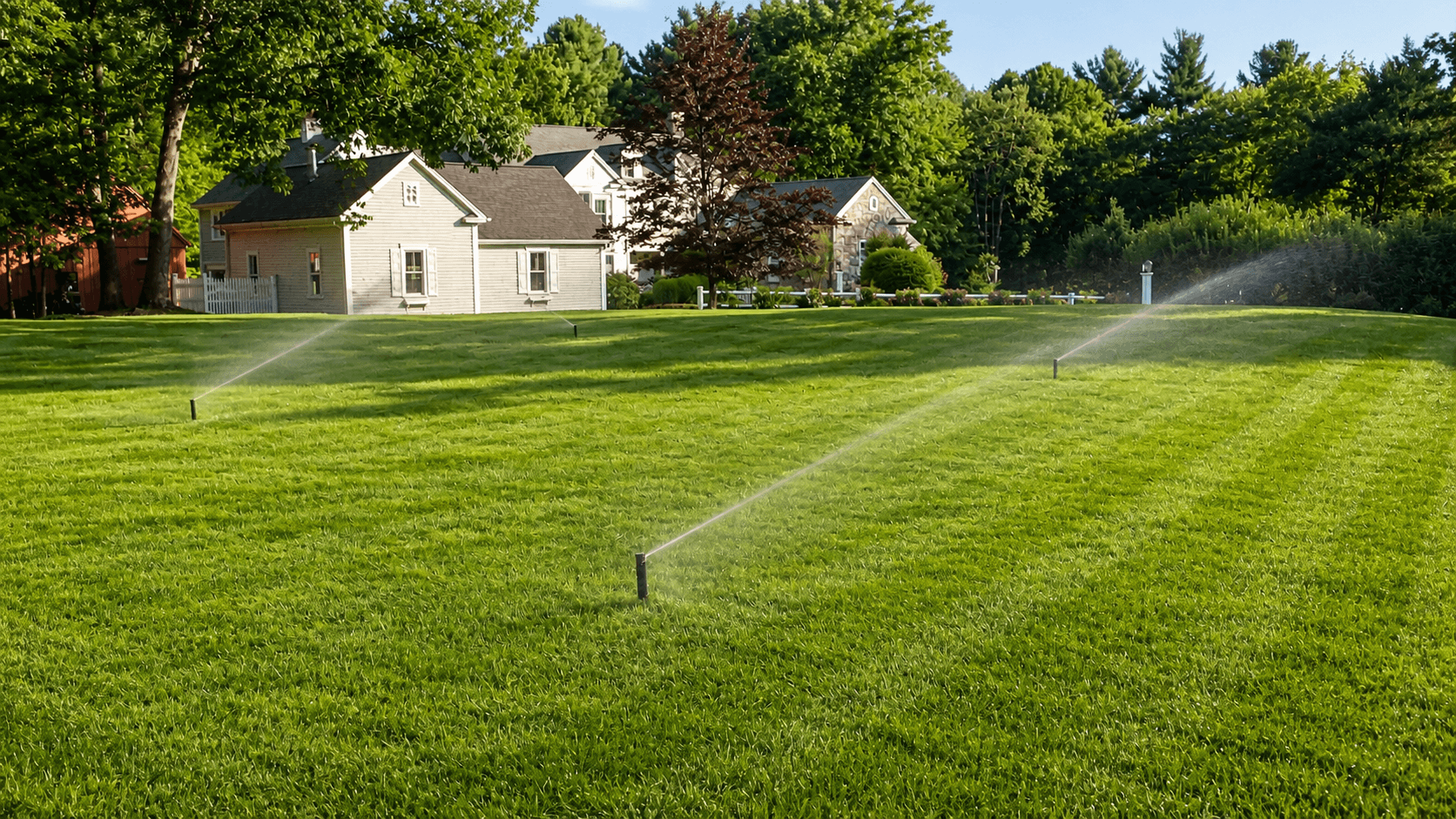
If your irrigation system waters the same way every week, there is a good chance you are using more water than necessary. Many homeowners only notice the issue when summer bills rise, but the real problem is often a schedule that does not reflect current weather or soil conditions.
Smart irrigation systems in Massachusetts address this by automating adjustments that save water and support healthier landscape maintenance.
What Does a Smart Irrigation System Do?
A smart irrigation system helps you water your lawn with more accuracy. Instead of running on the same timer every week, it adjusts based on actual outdoor conditions. This helps you reduce waste, protect plant health, and make better use of water.
- Weather-Based Adjustments
Weather has a direct effect on how quickly your lawn and soil dry out. A smart irrigation system Massachusetts connects to local weather data to delay watering before rain, reduce watering during cooler periods, and increase it when hotter conditions create more demand. - Soil Moisture Monitoring
Some smart systems use soil moisture sensors to measure how much water is already in the ground. This helps prevent unnecessary watering in areas that stay wet longer and improves accuracy across different parts of your yard.
Zone-Specific Watering
Different areas of your landscape need different amounts of water, especially if you have grass, shrubs, and garden beds. Smart irrigation systems let you control each zone separately so every section gets watering that matches its specific needs.
How Much Water Can a Smart Irrigation System Save?
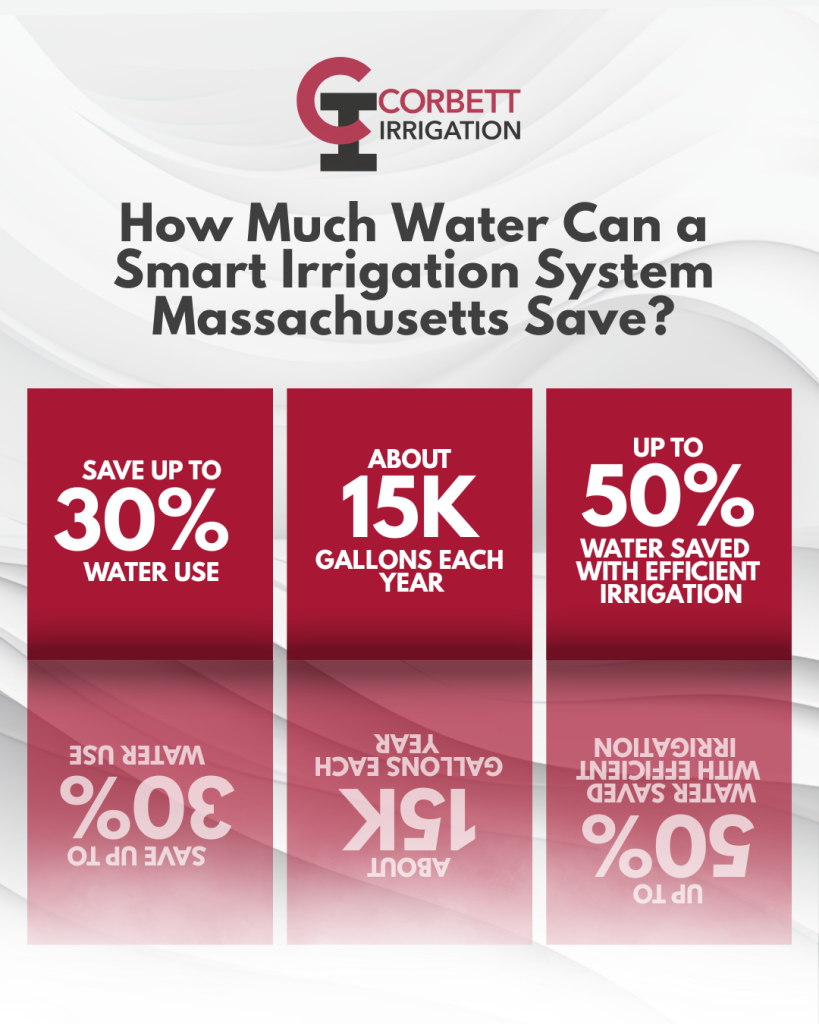
Smart irrigation systems save water by reducing the most common forms of irrigation waste. According to the U.S. Environmental Protection Agency, they can cut outdoor water use by up to 30%, with average savings of about 15,000 gallons per year. That matters in Massachusetts, where changing weather often makes fixed watering schedules inefficient.
Most of the waste comes from watering after rain, following preset schedules without adjusting for conditions, and giving every zone the same amount of water. The EPA also estimates that up to 50% of outdoor water use is wasted because of inefficient irrigation practices.
If your system uses 1,000 gallons per week during the growing season, a 30% reduction would bring that down to 700 gallons, which adds up to major savings over several months.
These results are especially relevant for Massachusetts homeowners. Rainfall and temperatures can shift quickly, and many towns enforce watering restrictions during dry periods. A smart irrigation system Massachusetts adjusts automatically, which helps you use less water, avoid unnecessary watering, and stay more aligned with local conditions.
Cost Savings and Long-Term Value
Water savings also lead to lower operating costs. If irrigation makes up a large share of your summer water bill, cutting usage by 20% to 30% can create noticeable savings each month.
For example, if you spend $100 per month on irrigation, a 30% reduction saves $30 monthly, or $180 over a six-month season, which can help offset the cost of a smart system over time.
Smart irrigation systems can also reduce maintenance needs and support better landscape health. Because the system runs only when needed, it puts less stress on valves, pipes, and sprinkler components, which can mean fewer repairs and a longer system lifespan.
More precise watering also helps prevent overwatering, which can weaken roots, encourage disease, and create runoff, so your lawn and plants stay healthier with more consistent moisture levels.
Over several years, this can offset the initial cost of installing a smart system.
Is a Smart Irrigation System Worth It?
For many homeowners, yes. The value comes from lower water use, lower seasonal costs, and less day-to-day management. Most systems cost between $300 and $1,500 depending on yard size and features, and in many cases, you can upgrade your existing setup with a smart controller instead of replacing the full system.
Because the water savings continue each season, many homeowners recover the cost within one to three years. Smart systems also make irrigation easier to manage through app-based controls, alerts, and automatic schedule changes, which is especially helpful if you have a larger yard, high summer water bills, or an automatic sprinkler system that is not adjusted often.
Practical Steps to Maximize Water Savings
Getting the most out of a smart irrigation system takes more than installation alone. You also need to fine-tune how the system is set up and pay attention to how it performs over time.
- Zone plants by water needs: Group plants with similar watering requirements together so each zone runs more efficiently.
- Check sprinkler coverage: Make sure sprinkler heads distribute water evenly to avoid dry patches and overwatered areas.
- Water in the early morning: Run your system early in the day to reduce evaporation and improve absorption.
- Review system alerts and reports: Monitor usage data regularly so you can catch leaks, malfunctions, or unusual water use early.
- Adjust settings seasonally: Update your schedule as temperatures and rainfall change so you do not apply more water than your landscape needs.
- Inspect for leaks regularly: Check valves, pipes, and sprinkler heads for leaks that can quietly waste water over time.
- Use the right run times: Set watering durations carefully so the soil absorbs water properly without creating runoff.
Final Takeaway
Smart irrigation systems reduce water use by adjusting to real conditions instead of following fixed schedules. This leads to consistent savings, often around 20% to 30%, and can save thousands of gallons each year.
In Massachusetts, where weather patterns shift frequently and water restrictions are common, this level of control makes a measurable difference.If your current system runs on a timer, there is a strong chance you are using more water than necessary. A smart irrigation system Massachusetts from Corbett Irrigation gives you a way to correct that without adding more work to your routine.