Water waste is easy to miss because it often starts small. A slow leak can run for days, or an irrigation zone can stick on when no one is watching. By the time you notice, the bill is higher or the damage is already done.
Smart water management helps you see what’s happening in real time. It uses connected devices and software to monitor, measure, and control water use so you can act before waste becomes expensive.
This guide explains the core tools, namely sensors, meters, leak detection, and automation, and how they work together. You’ll also learn what to look for if you want a setup that performs well and is easy to manage.
What is Smart Water Management?
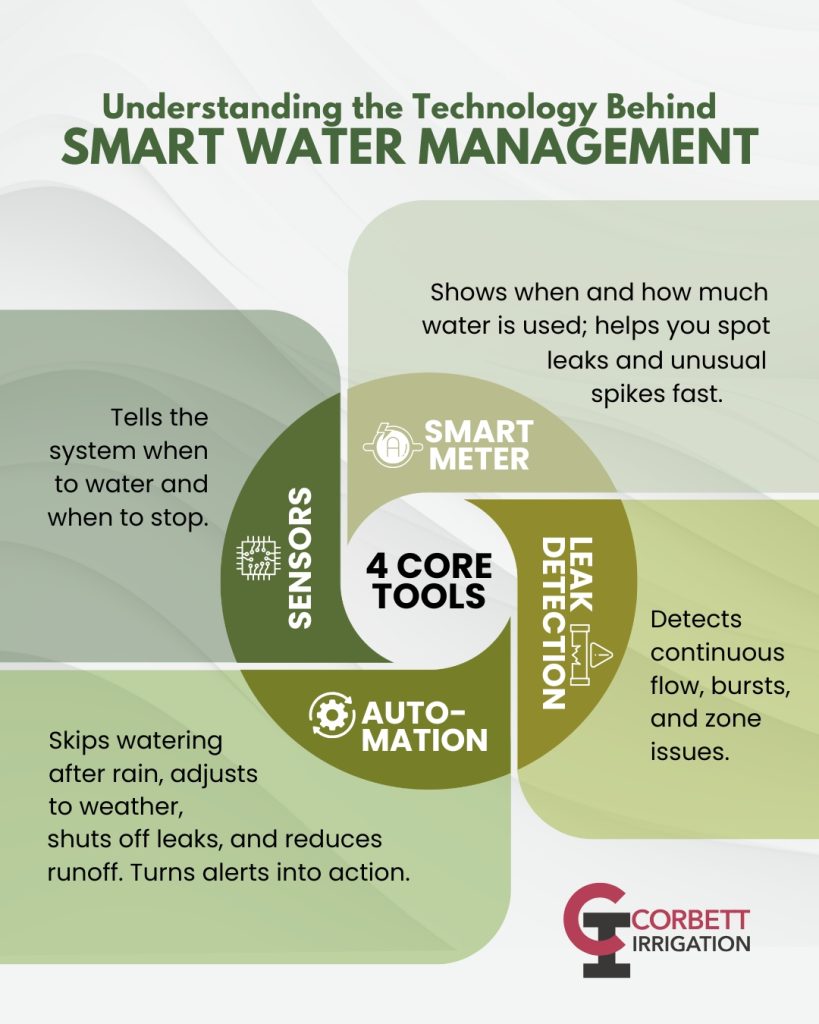
Smart water management is the use of connected devices and software to monitor, measure, and control water use in real time. It typically includes sensors, smart meters, leak detection, and automated controls that send alerts, track usage patterns, and adjust water flow or irrigation schedules.
The goal of smart water management is to reduce water waste, prevent leaks and property damage, lower water bills, and improve efficiency using data-driven decisions.
The Problems Smart Water Management Solves
Outdoor smart water management fixes the biggest irrigation problem: watering on a set schedule instead of real conditions. It prevents overwatering after rain, reduces runoff on slopes, and helps each zone get the right amount of water.
It also catches common outdoor issues early, like broken sprinkler heads, stuck valves, and uneven coverage that wastes water and weakens turf. Instead of increasing run times to “fix” dry spots, you get alerts that point to the actual zone problem.
With sensors, flow monitoring, and weather-based controls, the system adjusts watering automatically and flags abnormal use fast. You waste less water, protect your landscape, and keep lawns and plants healthier with fewer manual checks.
Smart Sensors
Sensors act like the “eyes” of a smart water management system. They measure conditions and send information to a controller or platform so you can make decisions based on what’s actually happening.
Different sensors solve different problems, so the best setups use the right combination for the property. If you pick sensors based on your risks, you get better results with fewer false alarms.
1. Soil Moisture Sensors
Soil moisture sensors measure how wet the soil is, which helps answer whether an area truly needs water. This matters because many systems water on a schedule even when the soil is still holding moisture.
When soil stays wet, watering again can create runoff, fungus, and shallow roots. Moisture sensors help you skip watering at the right times, especially in shade, clay soil, or low spots.
2. Rain and Freeze Sensors
Rain sensors pause irrigation when rainfall is detected, and freeze sensors stop watering when temperatures drop. These sensors reduce waste during storms and help prevent damage or hazards in colder weather.
Even basic rain sensors can make a noticeable difference if your system currently waters no matter what. Smart versions can also work with controllers that use forecast data to delay watering ahead of major rain.
3. Flow Sensors
Flow sensors measure how much water is moving through a line, which makes them one of the most effective tools for catching leaks fast. They can alert you when flow is higher than expected for a zone or when water runs outside scheduled times.
This is how you catch broken heads, stuck valves, and line breaks before they waste days of water. If a zone normally runs at a certain rate and it suddenly spikes, the system can flag it immediately.
4. Pressure Sensors
Pressure sensors monitor water pressure so you can catch issues that lead to poor coverage or constant repairs. High pressure can break components and cause misting, while low pressure can indicate leaks or supply problems.
If you’re replacing heads and fittings often, pressure may be the real issue. Monitoring helps you fix the cause instead of repeating repairs.
5. Weather-based Data and ET
Many smart systems use local weather data rather than installing a weather station onsite. They adjust watering based on temperature, humidity, wind, rainfall, and evapotranspiration (ET), which estimates how much water plants lose.
This matters because plants do not need the same schedule every week or every season. Weather-based adjustments reduce wasted cycles and help landscapes stay consistent through changing conditions.
Smart Meters
A standard water meter tells you total use, but it won’t tell you when the water was used or why. A smart meter breaks usage into patterns so you can spot changes quickly.
Depending on the system, you may see daily totals, hourly trends, spikes, and continuous flow. The best setups help you separate indoor use from irrigation use, which makes troubleshooting much faster.
Look for red flags like water use late at night, constant low-level flow all day, or sudden jumps compared to last week. Those patterns often point to leaks, stuck valves, or schedule changes that no one documented.
Leak Detection
Leak detection works by identifying abnormal water behavior. A good system doesn’t just say “leak detected,” but shows when it started, how long it has been running, and how severe it may be.
Continuous flow detection is one of the most useful features because many leaks show up as nonstop water movement. Spike detection is also helpful because it catches sudden events like bursts, major breaks, or large errors.
When leak detection is tied into irrigation zones, you can narrow the issue down to a specific area. That reduces time spent searching and helps you fix the problem before it becomes a larger repair.
Automation
Monitoring helps you understand what’s happening, but automation is what prevents waste at scale. It turns alerts and conditions into actions like skipping watering or shutting off water.
Smart irrigation controllers adjust schedules based on rules and inputs like soil moisture, weather, and zone performance. They also support features like cycle-and-soak, which reduces runoff on slopes or compact soil by watering in shorter bursts.
Automatic shutoff valves add another layer of protection by stopping water flow during serious leak events. This is especially valuable for rentals, commercial sites, or second homes where leaks can run for hours before anyone sees them.
Where Does It Have the Highest Impact?
Smart water management can help almost any property, but it makes the biggest impact when irrigation is involved. Irrigation waste adds up quickly because it often runs for long cycles and covers large areas.
It also delivers strong value for HOAs, multi-family communities, and commercial sites where tracking water use manually is difficult. More lines, more zones, and more people using water creates more risk, which is where monitoring and automation help.
If your water bills swing without a clear reason, smart monitoring gives you visibility into what changed. If the property is vacant or not checked daily, automated protection becomes even more important.
Smart Water Management Checklist
Outdoor water waste usually comes from irrigation running on fixed schedules, broken heads, or valves that fail quietly. A smart water management setup helps you track zone performance, catch abnormal flow fast, and automate watering based on real conditions. Use this checklist to plan the right system before you install anything.
- Define your goal: This keeps your setup focused on the outdoor problems you actually want to solve, like irrigation waste, runoff, or leak detection.
- Map your system: This ensures you know where every zone, valve, controller, shutoff, and meter is located so troubleshooting is fast.
- Note problem areas: This helps you target sensors and schedule changes where dry spots, pooling, overspray, and runoff happen most.
- Check irrigation hardware: This prevents broken heads, clogged nozzles, and failing valves from wasting water and triggering false alerts.
- Confirm water conditions: This helps you set realistic flow and pressure expectations so zones water evenly and sensors read accurately.
- Choose a smart controller: This gives you zone-level control, weather-based adjustments, and cycle-and-soak options that reduce waste.
- Add a flow sensor: This detects abnormal flow fast so you can catch breaks, stuck valves, and major leaks before they waste water.
- Add soil moisture sensors: This prevents watering when the soil is already wet and improves consistency across sun and shade zones.
- Decide on a smart shutoff valve: This protects the property by stopping water automatically when a serious leak is detected.
- Confirm connectivity: This keeps alerts, remote control, and reporting reliable without frequent disconnects.
- Set up user access: This limits schedule changes to the right people so settings don’t get overwritten by mistake.
- Label every zone correctly: This makes alerts and reports actionable because they point to the exact area that needs attention.
- Set alerts: This notifies you when high flow, watering outside schedule, or equipment issues show up.
- Set automation rules: This lets the system pause or adjust watering based on rain, soil conditions, and abnormal flow.
- Calibrate expected flow ranges: This reduces false alarms by teaching the system what “normal” looks like for each zone.
- Run a full test: This confirms every zone reports properly and all alerts and automations work before you rely on them.
- Track results for 2–4 weeks: This gives you real data to fine-tune run times, thresholds, and skip rules.
- Set a maintenance routine: This keeps heads, filters, valves, and sensors working so the system stays accurate over time.
How Corbett Irrigation Helps
At Corbett Irrigation, we treat smart water management as a system you build with intention, not a gadget you install and hope for the best. That means we focus on visibility, control, protection, and long-term performance.
We start by understanding how water is used on your property, then choose tools that solve your most expensive problems first. The right setup should reduce waste, improve landscape consistency, and make issues easier to manage, not harder.
We also help you avoid common missteps, like adding sensors without mapping zones correctly or turning on automation without establishing a baseline. When the system is configured properly, you get fewer false alarms and faster fixes when something changes.
First Steps You Can Take Now
Review your last three months of water bills and flag spikes or a higher baseline that doesn’t drop. Do a quick leak test by turning off fixtures and irrigation, then check if the meter still moves.
Run each irrigation zone and walk the property to spot overspray, pooling, misting, or broken heads. Then review your controller schedules to make sure they adjust for seasons and rainfall.
Choose one upgrade based on your biggest risk: a smart controller for scheduling, a flow sensor for frequent breaks, or a shutoff valve for leak protection. If you need expert help, Corbett Irrigation can help you select, install, and set rules that work.