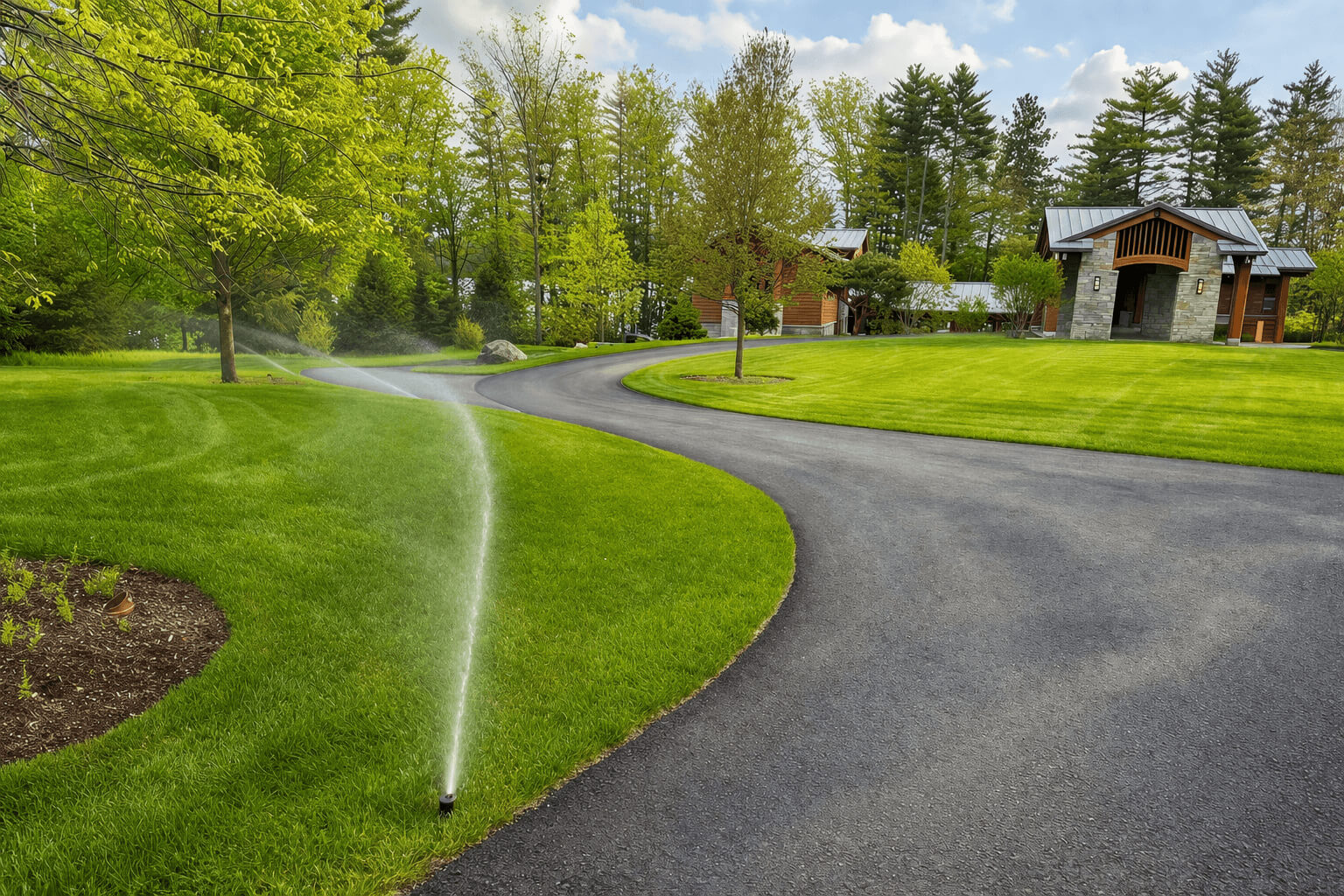
Commercial irrigation is property infrastructure. If it runs poorly, you pay in three ways: higher water use, damaged landscape, and more service calls. On high-value properties, those costs show up fast because the landscape is expensive to replace and highly visible to tenants and visitors.
If you’re trying to avoid surprise spend and visible landscape decline, you need a practical baseline: what the system is, how it’s supposed to perform, and which failure points show up first on large properties.
What is Commercial Irrigation?
Commercial irrigation is a professionally designed and managed watering system used to deliver the right amount of water to landscapes on commercial and large-scale properties. It supplies specific water volumes to different areas of a site based on factors like plant type, sun exposure, soil conditions, slope, and local water regulations.
Unlike residential sprinklers, commercial irrigation is built for complex sites such as office parks, HOAs, retail centers, medical facilities, campuses, and high-value properties. It typically includes zoned piping networks, valves, controllers, and irrigation methods (such as rotors, sprays, and drip irrigation) so each area can be watered independently and efficiently.
A well-run commercial irrigation system aims to do three things:
- Keep the landscape consistent across the property.
Control water use to reduce waste and stabilize operating costs. - Reduce risk by preventing runoff, overspray, plant loss, and compliance issues.
If your landscape looks uneven or your water bill rises without a clear reason, your commercial irrigation system likely needs a professional review.
How Does a Commercial Irrigation System Work?
A commercial irrigation system moves water from a supply source to specific areas of a property through a controlled network of components. The system is designed to apply the right amount of water to each zone based on plant needs, site conditions, and efficiency goals.
1) Water Supply and Backflow Protection
Water typically comes from a municipal connection, reclaimed water, a well, or on-site storage. Before water enters the irrigation network, a backflow prevention device protects the public water supply. This is a standard compliance requirement on most commercial properties.
2) Mainline and Lateral Piping
From the water source, water travels through underground piping. The mainline is the primary pressurized pipe that feeds the site. Lateral lines branch off from the mainline and carry water to individual irrigation zones.
Pipe sizing and layout matter because they affect water pressure and flow across the property. If the system can’t maintain stable pressure, coverage becomes inconsistent.
3) Valves and Zone Control
Commercial properties are divided into zones, and each zone is controlled by a valve. When a valve opens, it sends water to that zone only.
Zones are typically separated based on factors like:
- Plant type (turf vs. shrubs vs. trees)
- Sun exposure
- Soil conditions
- Slope and drainage
This is what allows one area to receive short, frequent watering while another gets deep, less frequent watering.
4) Sprinkler Heads and Drip Emitters
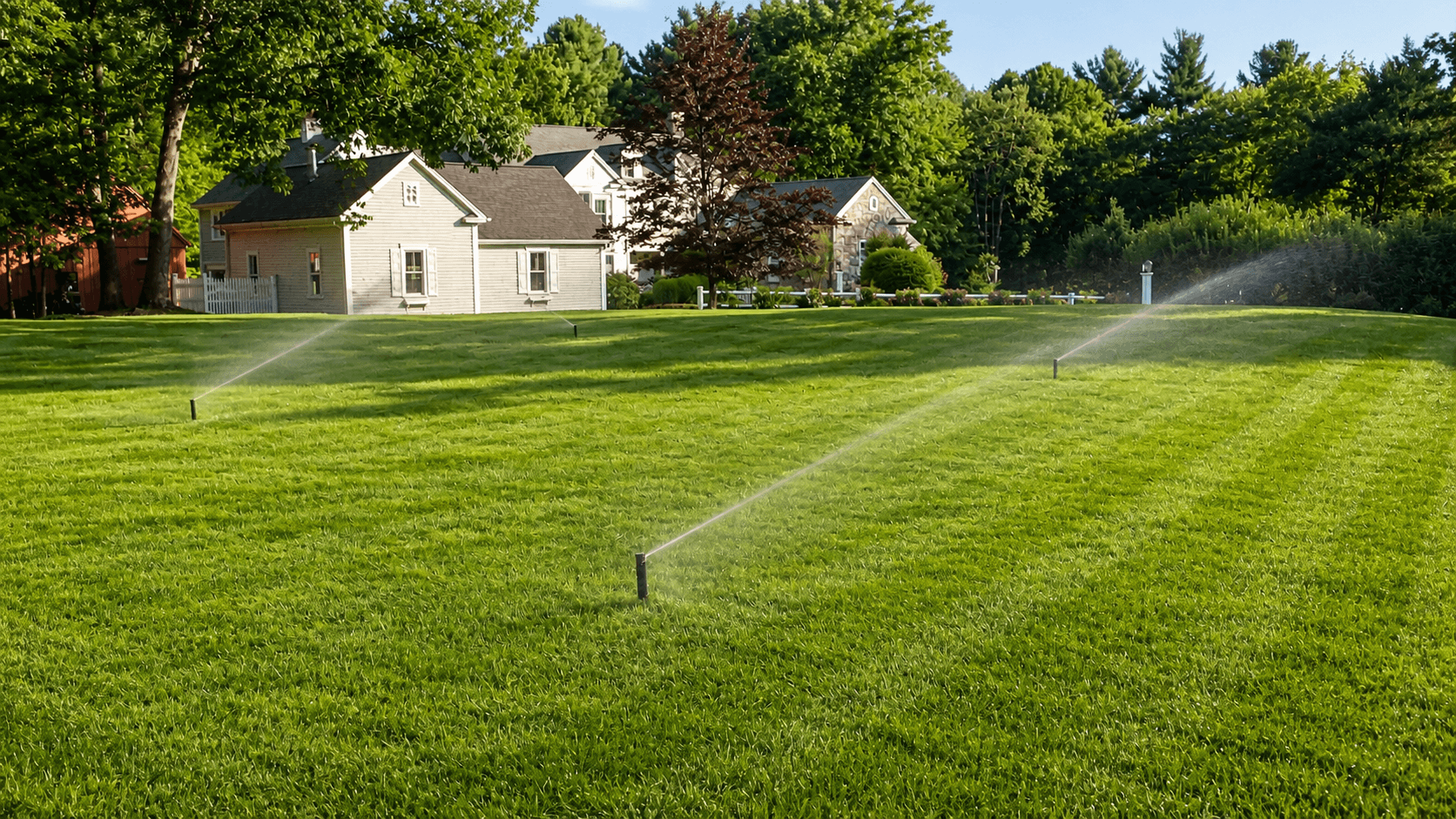
Water is applied through devices chosen for the landscape type. Large turf areas often use rotors while small turf sections may use spray heads. Planting beds and trees often use drip irrigation.
Each device applies water at a different rate. Matching the right device to the right zone helps prevent runoff, overspray, and dry spots.
5) Controllers and Smart Monitoring
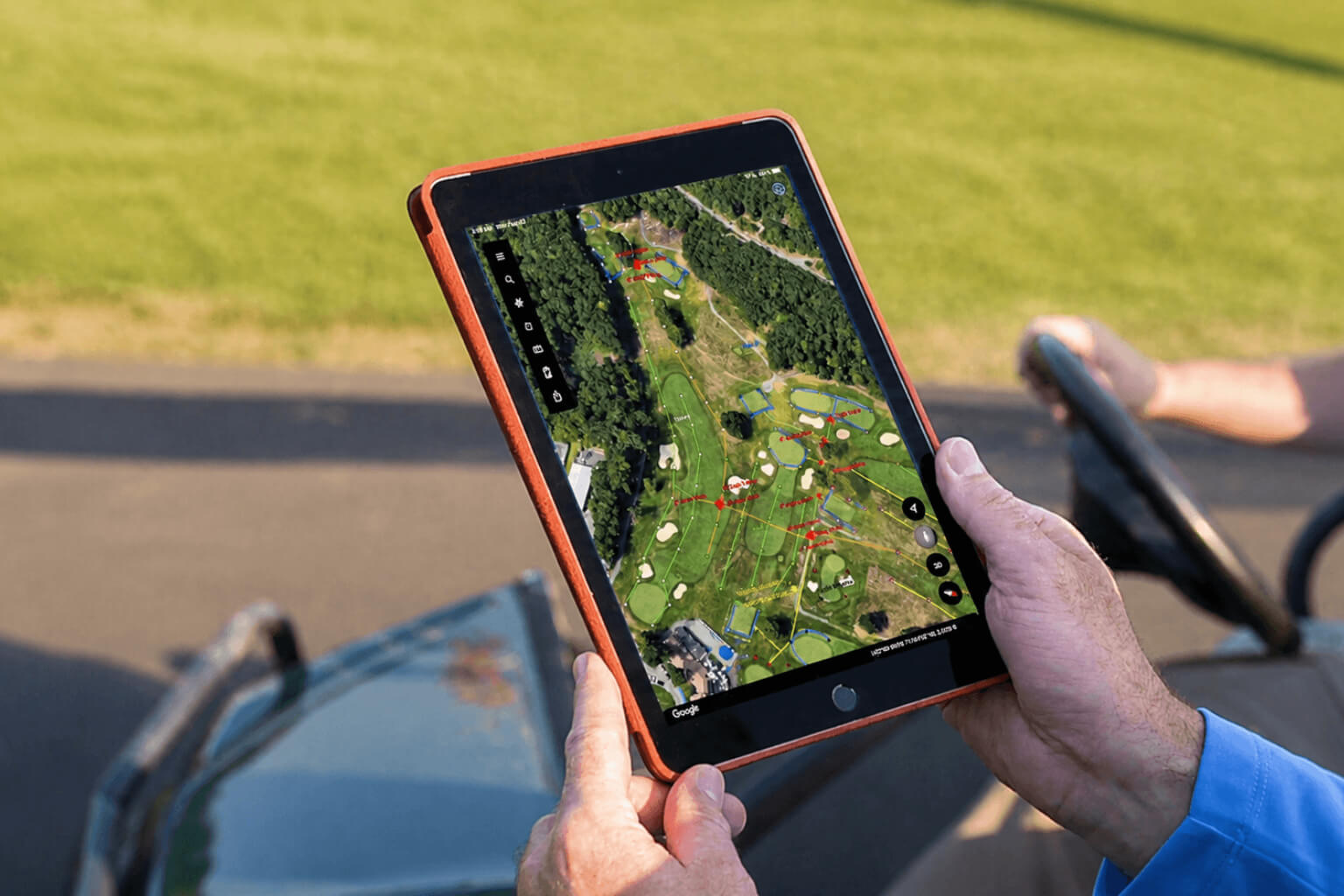
A controller schedules watering times and run durations for each zone. Modern commercial systems often use smart controls that adjust watering based on weather data, soil moisture, or seasonal conditions.
Some systems also include flow monitoring, which can detect abnormal water movement caused by leaks or broken lines. That monitoring matters on large properties because a major leak can waste large volumes of water before anyone sees it.
When all of these parts work together, commercial irrigation becomes predictable and efficient. When any part is misaligned, whether zoning, pressure, equipment choice, or scheduling, the system still runs, but results suffer.
How Much Does It Cost?
Commercial irrigation costs depend on landscaped area, zone count, trenching/restoration difficulty, pressure or pump needs, and controller/monitoring requirements.
For new installations, many commercial projects fall around $25,000–$120,000. Early budgeting is often done by site size, such as $2,500–$12,000 per acre or roughly $1.54–$2.45 per sq ft as a general installation benchmark (complex commercial sites can run higher).
Ongoing costs typically include scheduled service and repairs. A common pricing model is $163–$291 per zone for routine service, and many repair visits average $100–$400, with higher costs when troubleshooting or access is difficult.
Many commercial sites also budget for compliance items like backflow testing ($75–$150+), and backflow device replacement can range $1,000–$10,000+ depending on size and installation complexity.
Compliance Is Part of the System Now
Commercial irrigation is increasingly tied to water regulations, especially on large-scale properties. Many areas enforce watering schedules, runoff rules, and efficiency requirements. That means irrigation performance is no longer just a landscape issue; it is also an operational and compliance issue.
A system that applies water unevenly is more likely to create runoff, overspray, and overwatering. Those outcomes increase the risk of violations, penalties, and public-facing complaints. This is why modern commercial irrigation management often includes weather-based scheduling, zone-level control, and monitoring that helps detect abnormal flow and prevent water waste.
The most reliable approach is to build compliance into how the system operates. When zones are grouped correctly and programmed based on plant type, sun exposure, soil, and slope, the property is more likely to stay within regulations while maintaining landscape quality.
Why Commercial Irrigation Fails
Commercial irrigation systems often fail for the same reason: the system keeps running, but the site changes. Plant material gets updated, shade patterns shift as trees mature, and new hardscape or landscape features get added. Unless the irrigation zoning and programming are reviewed and adjusted, the system continues watering based on old conditions.
Here are the most common failure points and what they typically lead to on large-scale commercial properties.
1) Programming Drift
Programming drift happens when irrigation run times are increased to handle heat or dry conditions, but the schedule is not reduced when conditions change.
Over time, the system waters more than the landscape needs because settings stay in place long after the original reason for the change is gone. This is a common reason water use increases year over year, even when the property has not expanded.
2) Hidden Leaks
Hidden leaks occur when water escapes from underground piping, valves, or fittings without creating visible puddles. Because the water is absorbed into soil, the landscape may still look normal at first.
In many cases, the earliest sign is a higher water bill or unexplained increases in water use over multiple billing cycles.
3) Pressure Issues
Pressure issues happen when water pressure is either too high or too low for the system’s design. High pressure can cause misting and overspray, which reduces how much water reaches plant roots and increases wear on equipment. Low pressure can lead to weak coverage and dry areas because sprinkler heads do not distribute water evenly.
In both cases, increasing run time often raises water use without solving the underlying distribution problem.
4) Bad Zoning
Bad zoning happens when irrigation zones are grouped based on convenience rather than water needs. For example, turf areas may be placed on the same zone as shrubs or shaded beds may be grouped with full-sun areas.
This forces one watering schedule onto areas that require different water volumes and timing. The result is overwatering in some areas, underwatering in others, and long-term inefficiency across the site.
How to Manage Commercial Irrigation
Commercial irrigation works best when it is managed like infrastructure, not treated as a seasonal task. The goal is to keep water application accurate as site conditions change. A consistent process also reduces water waste, landscape stress, and surprise repairs.
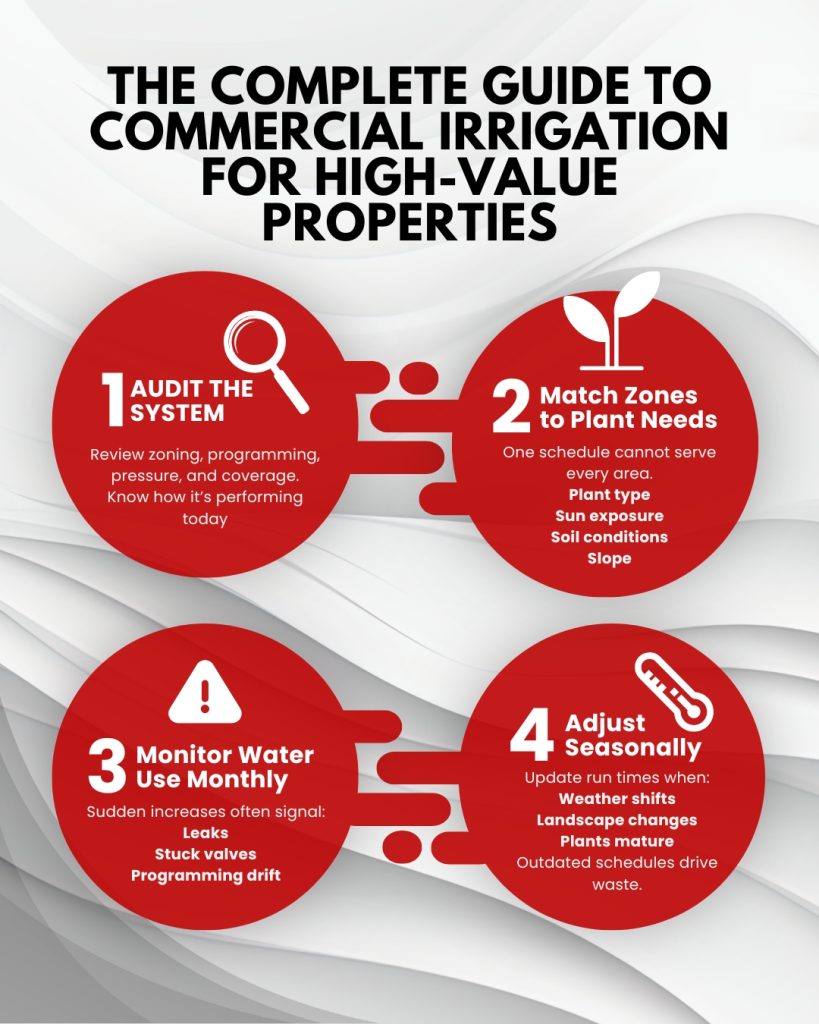
- Start with a system audit. Review zoning, controller programming, pressure, and coverage so you know how the system is performing today. This gives you a baseline and highlights issues that scheduling changes alone won’t fix.
- Match zones to plant needs and site conditions. Group zones by plant type, sun exposure, soil conditions, and slope so each area receives the right water volume. This prevents the common problem of overwatering one area to keep another alive.
- Use data to catch problems early. Track water use month to month and compare it to weather changes and seasonal demand. Sudden spikes often point to leaks, stuck valves, or programming drift before damage becomes visible.
- Adjust programming seasonally and after landscape changes. Update run times when temperatures shift, rainfall increases, or plant material is replaced. This keeps the system from watering based on outdated conditions.
- Inspect and maintain key components on a schedule. Check heads, valves, drip lines, and controllers regularly to prevent small issues from turning into large failures. Routine tuning also improves coverage and reduces runoff and overspray.
Upgrade vs. Replace
Upgrading a commercial irrigation system makes sense when the core infrastructure is sound and performance problems are coming from controls, hardware efficiency, or monitoring gaps.
For many properties, targeted improvements, such as updated controllers, pressure regulation, improved heads or nozzles, and expanded drip irrigation, can significantly improve distribution and reduce water use without rebuilding the entire system.
Replacement becomes the better option when the system’s layout no longer fits the property. This often happens when zoning is built in phases and areas with different plant needs end up sharing the same zone. It can also happen when repeated leaks, unstable pressure, or failing mainlines indicate that the underground network is reaching the end of its life.
A practical way to decide is to focus on repeat problems. If the same zones keep showing stress, if run times keep increasing to “keep up,” or if repairs are frequent without improving results, the system may need redesign rather than another patch.
Keeping Performance Predictable Year-Round
Commercial irrigation stays efficient when zoning, equipment, and programming match the property’s current conditions.
If the landscape looks uneven or water use doesn’t add up, the solution is usually a system review. Confirm that zones are grouped correctly, verify pressure and coverage, update the schedule, and use monitoring to catch problems early.
Corbett Irrigation can evaluate your system, pinpoint what’s causing waste or inconsistent results, and recommend the most practical next steps to keep performance steady year-round.